The Church of Self-Worth
(Written by Josette “Jo” Ciceron for Rochester Women Magazine)
Somewhere between the age of misplaced lip-gloss and that moment your body starts offering unsolicited feedback, women learn a quiet, cruel lesson: we are expected to fade.
Not dramatically. That would be too honest.
We fade politely.
We fade in family photos where we’re the one holding the baby, never the one being held.
We fade in mirrors, scanning for proof that we’re still allowed to be desirable, still allowed to be celebrated, still allowed to take up space without apologizing for it.
Nicole Mills is not interested in that kind of disappearing act.
A Sanctuary, Not a Studio
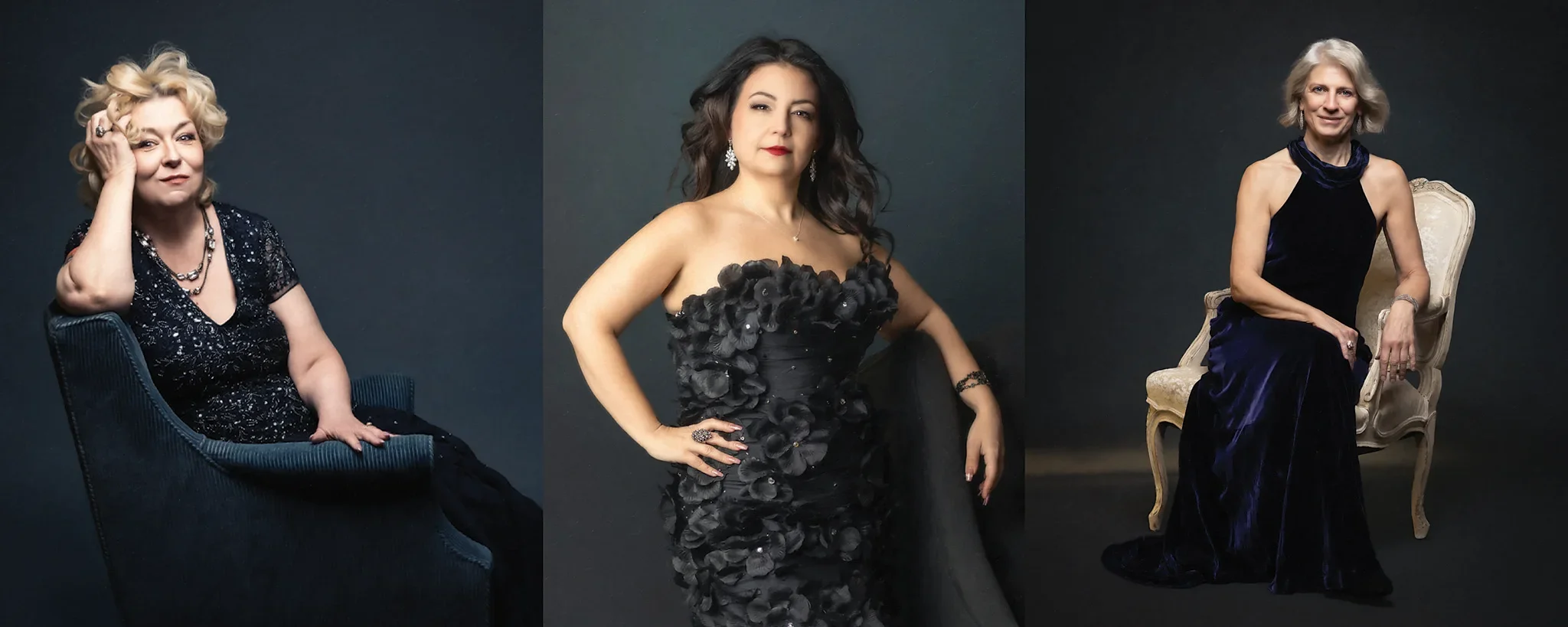
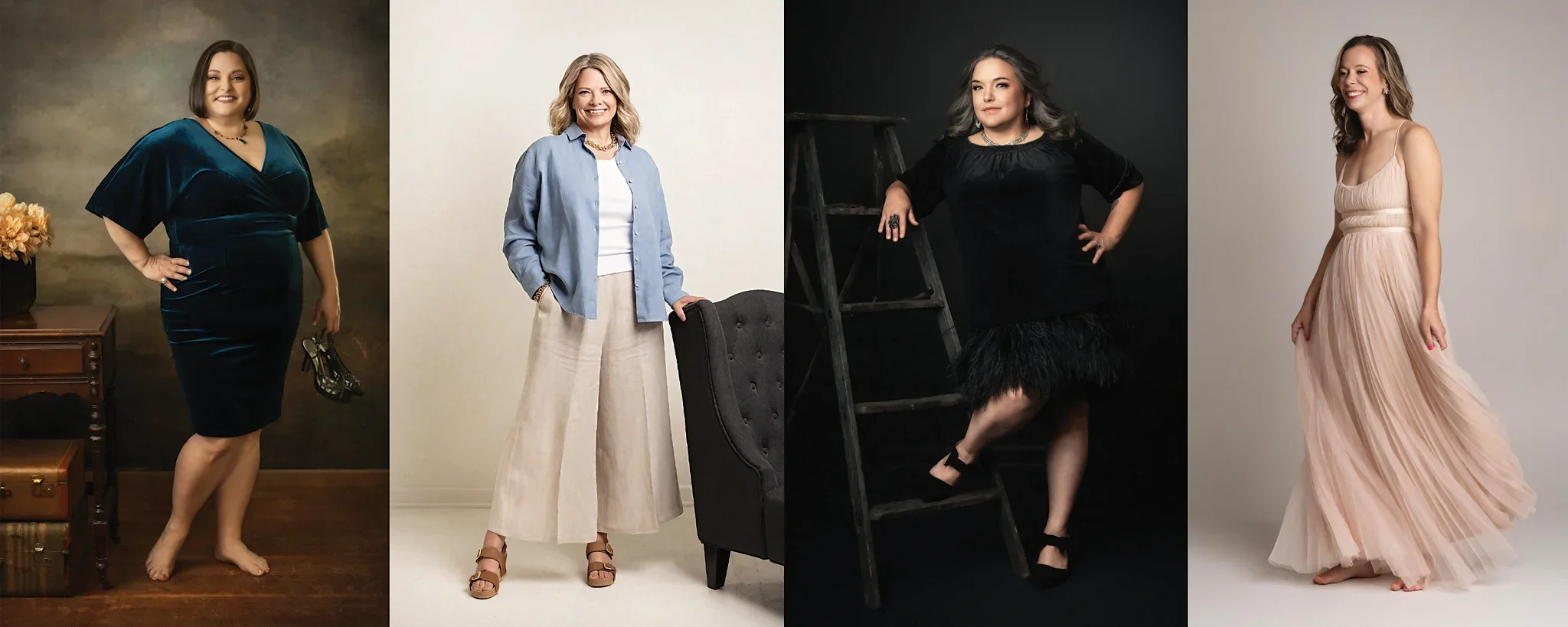
Mills—portrait photographer and owner of a Rochester-area studio that feels less like a business and more like a threshold—has built her work around a belief that is both radical and deeply human: women are not expired products. Their stories are not “over” because motherhood happened, marriage happened, divorce happened, weight happened, grief happened, aging happened.
When people ask what she does, Mills offers the short answer: “I’m a portrait photographer.”
It’s accurate on paper.
It’s also the kind of truth that leaves most of the story out.
What she’s created extends far beyond a title. Her studio—thousands of square feet housed inside a former church—is filled with gowns and textures, curated sets and heirloom furniture, hair and makeup stations, and something far rarer: time. Uninterrupted. Unapologetic. The kind most women are conditioned to give away before they ever think to claim it for themselves.
The space operates with intention. Not as a showroom. Not as a spectacle.
But as a woman-centered sanctuary—where stories are not rushed, bodies are not negotiated, and presence is treated as something sacred.
“I’ve Got You”
Mills works primarily with women—often women over 40—who arrive carrying the same
quiet prayer: God, please let there be one good one.
One image where they don’t look tired.
One where they don’t look “wrong.”
One where they can recognize themselves without bracing for impact.
Mills meets that fear with a promise that sounds simple, almost casual, and lands like medicine.
“I’ve got you.”
Her sessions unfold without urgency. No strict outfit limits. No countdown clock. No pressure to perform or impress. Instead, there is a steady reassurance—spoken and unspoken—that this moment is allowed to belong to them.
Her philosophy is unwavering: the body does not need fixing. Temporary distractions fade. Ill-fitting garments are shaped to the body, never the other way around. Nothing essential is erased.
The goal is not transformation.
It’s recognition.
“These portraits are going to look like you on your best day,” she says. “But there will be no question—it’s you.”
The Campaign That Changed Everything
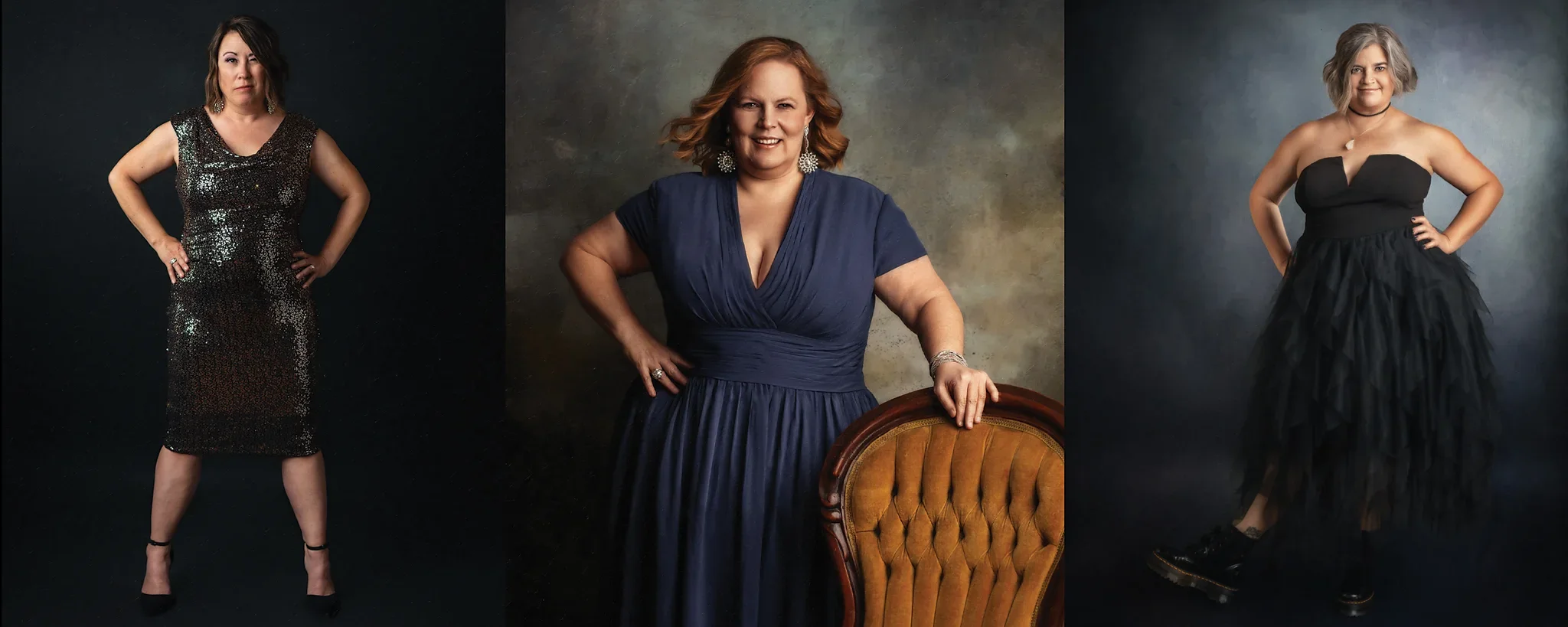
Five years ago, Mills launched a 40 Over 40 campaign—a familiar theory in photography circles that proved unexpectedly seismic in practice.
“I placed one $20 ad on Facebook,” she recalls. “Within 24 hours, 25 women signed up.”
Nearly all of them said some variation of the same thing: I never would have thought to do something like this for myself.
That, Mills says, was the point—and the problem.
From the brink of girlhood, women are conditioned to pour endlessly. Into children. Into partners. Into careers, households, obligations, expectations.
We become so practiced at caretaking that, over time, we begin editing ourselves out of the frame. We document birthdays, milestones, first days, last days—everyone else’s life in crisp, intentional detail—while our own presence becomes increasingly theoretical.
Scroll back far enough and you’ll see it.
Our children have a million beautiful photographs.
We have a handful—blurry, accidental, snapped while we were mid-task. Proof not of who we were, but of what we were doing for everyone else.
The 40 Over 40 campaign isn’t about vanity or reinvention. It’s a permission slip. An interruption. A gentle but firm suggestion that maybe—just maybe—women are allowed to exist as more than witnesses to their own lives.
For many of the women who step into Mills’ studio, it’s the first time in decades they have chosen themselves without justification. No milestone required. No apology offered.
This campaign isn’t just putting women in front of the camera. It puts them back into their own story.
The Girls Who Come Next
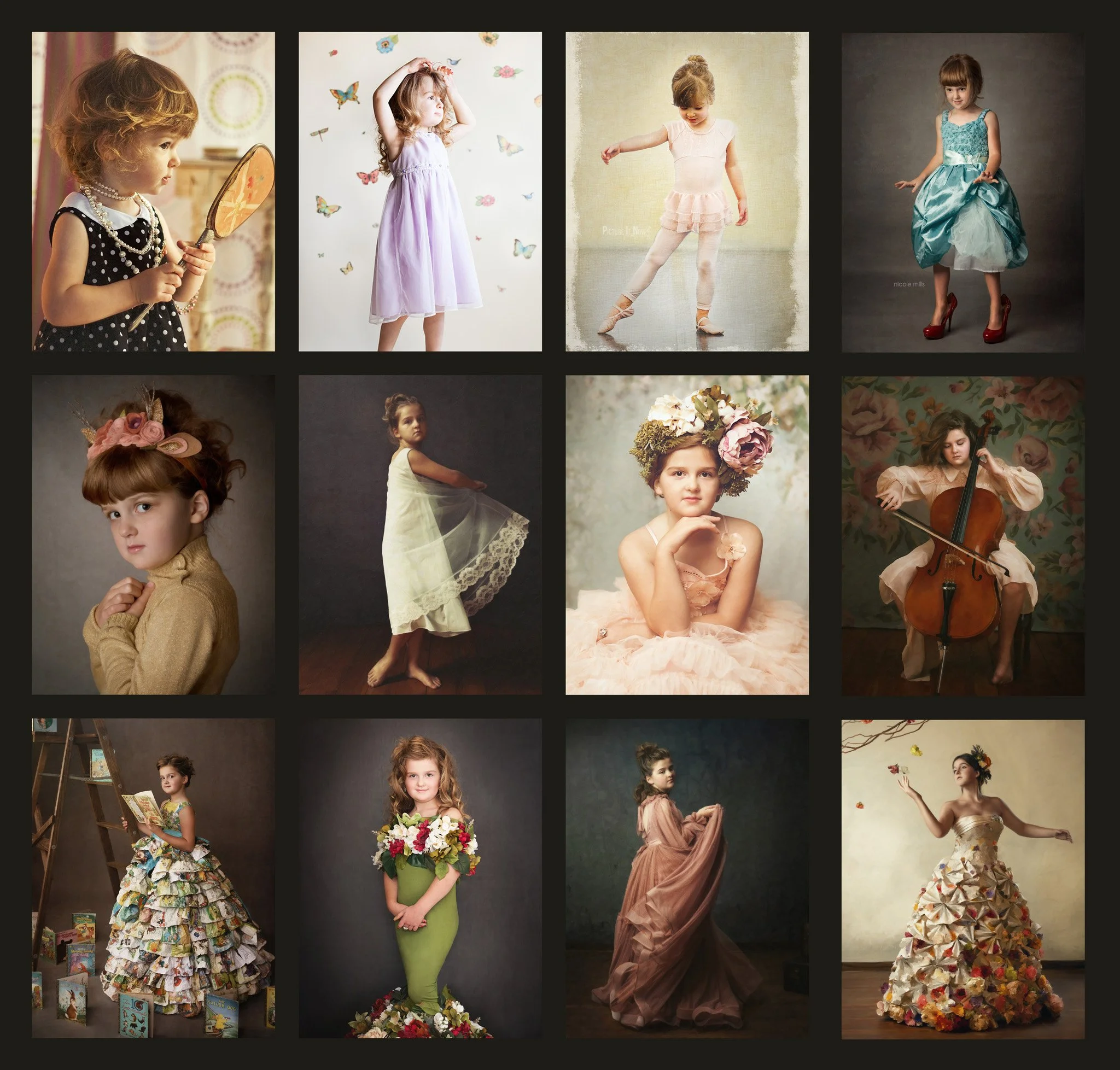
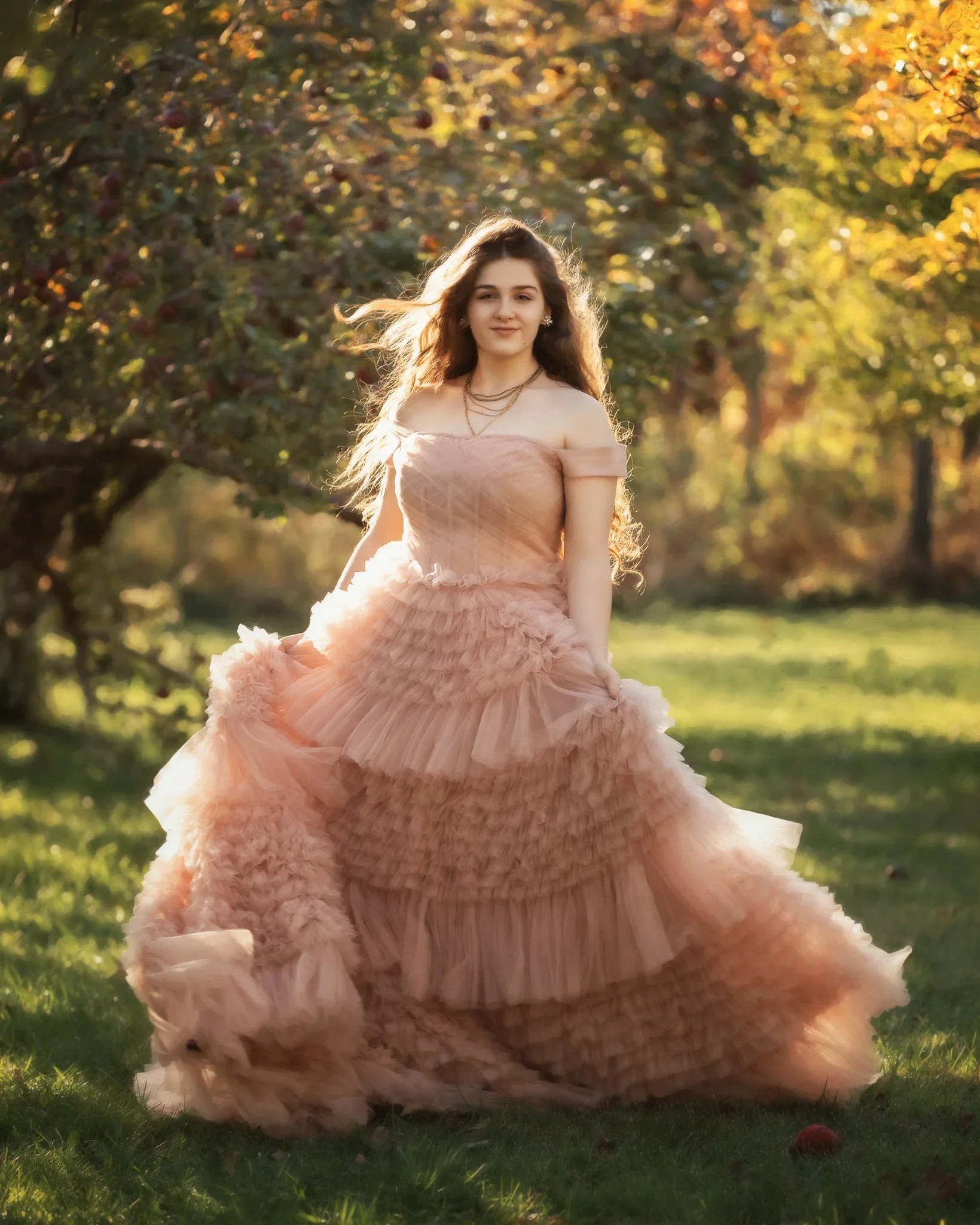
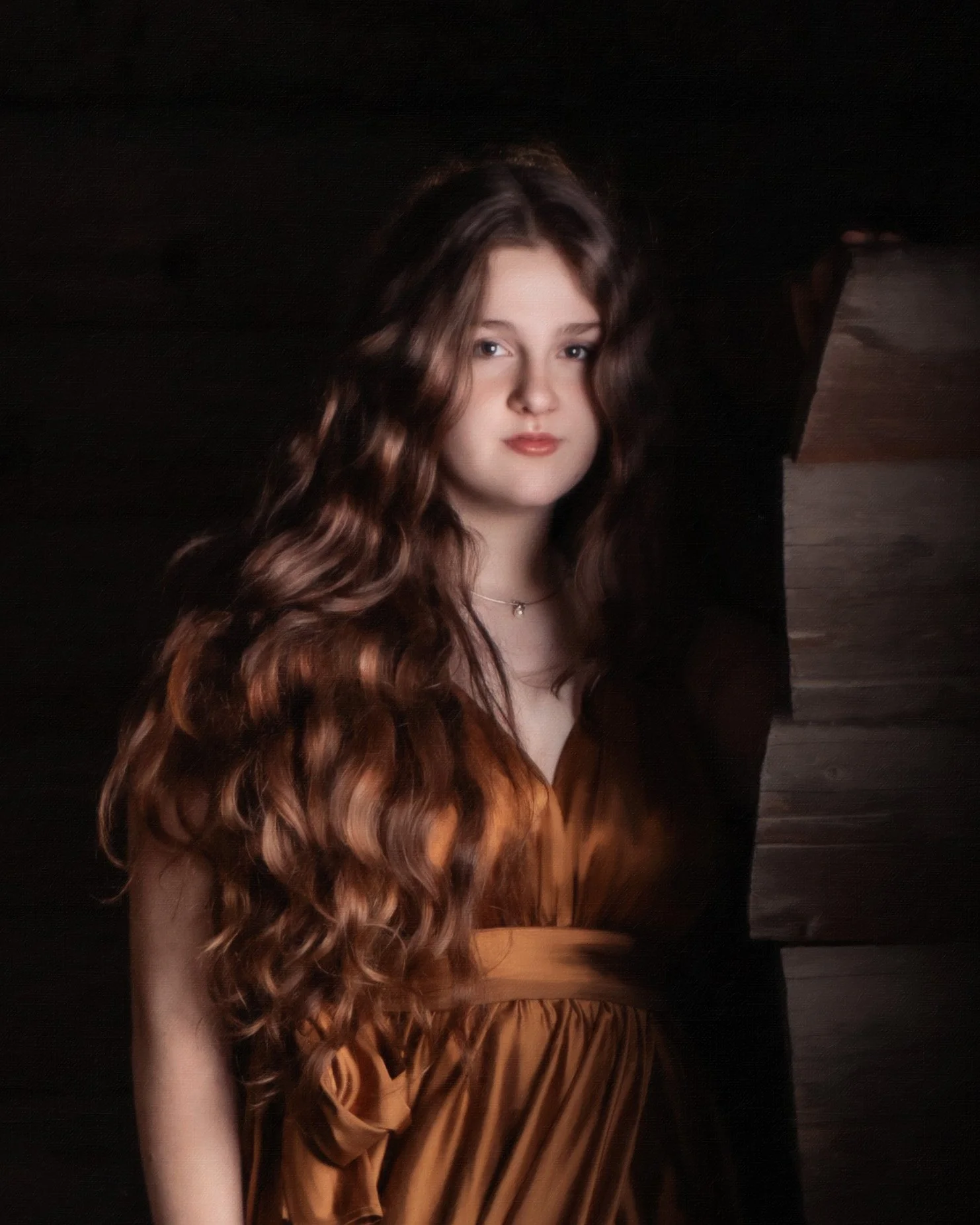
At the heart of Mills’ work is her daughter—the reason she picked up a camera in the first place. Photographing her opened a deeper awareness: not just of how quickly girls grow, but of how early the world begins instructing them on who they’re allowed to be.
Growing up is hard. The messages arrive early and often—about beauty, worth, silence, shrinking. Mills understands that if those messages are inevitable, then interruption becomes a responsibility—one she has woven into the fabric of her business.
She photographs girls with the same care she gives women: intentionally, reverently, without rush or correction. The goal isn’t performance. It’s presence. The work is preventative as much as it is restorative—an early reminder of something girls too often forget before they’re old enough to name it.
“If girls learn their worth early,” Mills says, “they won’t spend decades trying to reclaim it.”
The Angels Were Singing
As the business grew, it became clear that expansion wasn’t about square footage—it was about intention. And then, improbably, and perfectly, a church went up for sale in her small town.
Mills drove past it for weeks—the way you circle a thought you’re pretending not to have. Until one day, without ceremony or committee meetings, her car simply turned in.
Inside, the sanctuary was empty. Quiet. Waiting.
“The angels started singing,” she jokes—tongue firmly in cheek—but the moment landed with unmistakable clarity. Standing there in its unclaimed solitude, she could see it not for what it was, but for what it could hold: women arriving tentative and leaving taller; stories spoken aloud; reverence redirected inward.
She called her husband from inside the building.
“I think we’re buying a church.”
His response was instant, unsurprised. “Of course we are.”
Today, the building hums with a different kind of devotion. The pews are gone, replaced by meticulously arranged fabrics, lights, textures, and moments captured in time. And yet, the sense of ceremony remains—quiet, intentional, and faintly rebellious.
This is still a place where women come to be witnessed. Only now, the altar is self-worth.
Art Meant to Outlive Us
Mills is scrupulous. She will take more than a thousand images in a single session, then return to them again and again—studying the things most miss. The micro-shift of a mouth before a smile fully arrives. The flicker of vulnerability someone didn’t mean to show. The exact second confidence decides to stay.
This is not fast work. It is careful work.
Her portraits are heirlooms. Not built for trends or timelines. They are crafted to outlast them.
“I want these images handed down to children and grandchildren,” she says. “So someday someone looks back and thinks—Dang, grandma was a hottie!”
It’s a joke, delivered with ease. But beneath it is something far more serious.
Because what she’s really preserving is proof. That a woman existed fully in her own body. That she was seen. That she was not just the keeper of memories, but worthy of being remembered.
The “Tie Dress” & the Beauty of Reinvention
Among the most striking pieces in Mills’ studio is a gown constructed entirely of neckties—an evolving, hand-built work of art years in the making. The fabric is familiar. The result is anything but.
Like much of her work, the dress is about reimagining what already exists. About taking objects that have lived whole lives elsewhere and refusing to discard them simply because their original purpose has passed. About transformation without erasure.
“I love taking things that had another life,” she says, “and giving them a new one.”
The metaphor lands without insisting on itself. Neckties—symbols of formality, labor, expectation—are dismantled and reassembled into something expansive, expressive, undeniably feminine. What was once uniform becomes singular. What once belonged to someone else becomes its own declaration.
It doesn’t strain for meaning.
It doesn’t have to.
High-End Art in an Uncertain World
Mills is candid about the tension of running a high-touch, fine-art business in an unpredictable economy. Her work is intentionally low-volume and deeply personal—built around time, trust, and attention. It is priced accordingly, not as a marker of exclusivity, but as a matter of sustainability.
“I won’t lower the work to lower the price,” she says simply. “I can’t.”
And yet, women return. Again, and again. Not because they were persuaded, but because they were changed.
One woman arrived visibly uncomfortable—guarded, nearly scowling, convinced the experience was not meant for her. During their conversation, Mills asked about hobbies. The answer caught her off guard: skydiving.
Mills laughed. “You’ll jump out of a perfectly good airplane,” she said, “and standing in front of my camera terrifies you?”
The moment cracked something open. The wall fell. The woman returned—multiple times—bringing family, building trust, coming back not for reassurance, but recognition.
That’s the difference.
Not salesmanship.
Belief.
Your Story is Still Unfolding
In a disarmingly human moment, Mills acknowledges she’s afraid of death—not theatrically, but honestly. Not in a way that seeks drama, but in a way that sharpens urgency.
“You only get one shot at this,” she says. “If we’re lucky, we get 100 years.”
That awareness hums beneath everything she builds.
Maybe that’s why her studio feels less like a business and more like a gentle rebellion. A place where women stop narrating themselves like footnotes. Where mirrors retire from their role as courtrooms. Where worth is not something to be proven, but something remembered.
A place where someone finally says:
You’re still here.
And you are still allowed to be seen.
About the Author
Josette “Jo” Ciceron is a journalist, author, and storyteller with more than 20 years of professional experience. Since 2019, she has hosted and produced the interview-driven podcast Unapologetically Anxious Me, where she connects with celebrities, influencers, experts, doctors, and artists to explore mental health, race, resilience, culture, and more. As a speaker and advocate for racial equity and mental health, Jo uses her platform to amplify community stories rooted in courage, dignity, and human perseverance—guided by her belief that vulnerability is our ultimate superpower.